Heavy Equipment Launching & Handling (Load-in / Load-out)
Load-out or launching is a critical stage in the transportation and construction of offshore structures such as oil and gas platforms and offshore wind farms. The most common load-out method uses SPMT.
1. Hydraulic transportation method
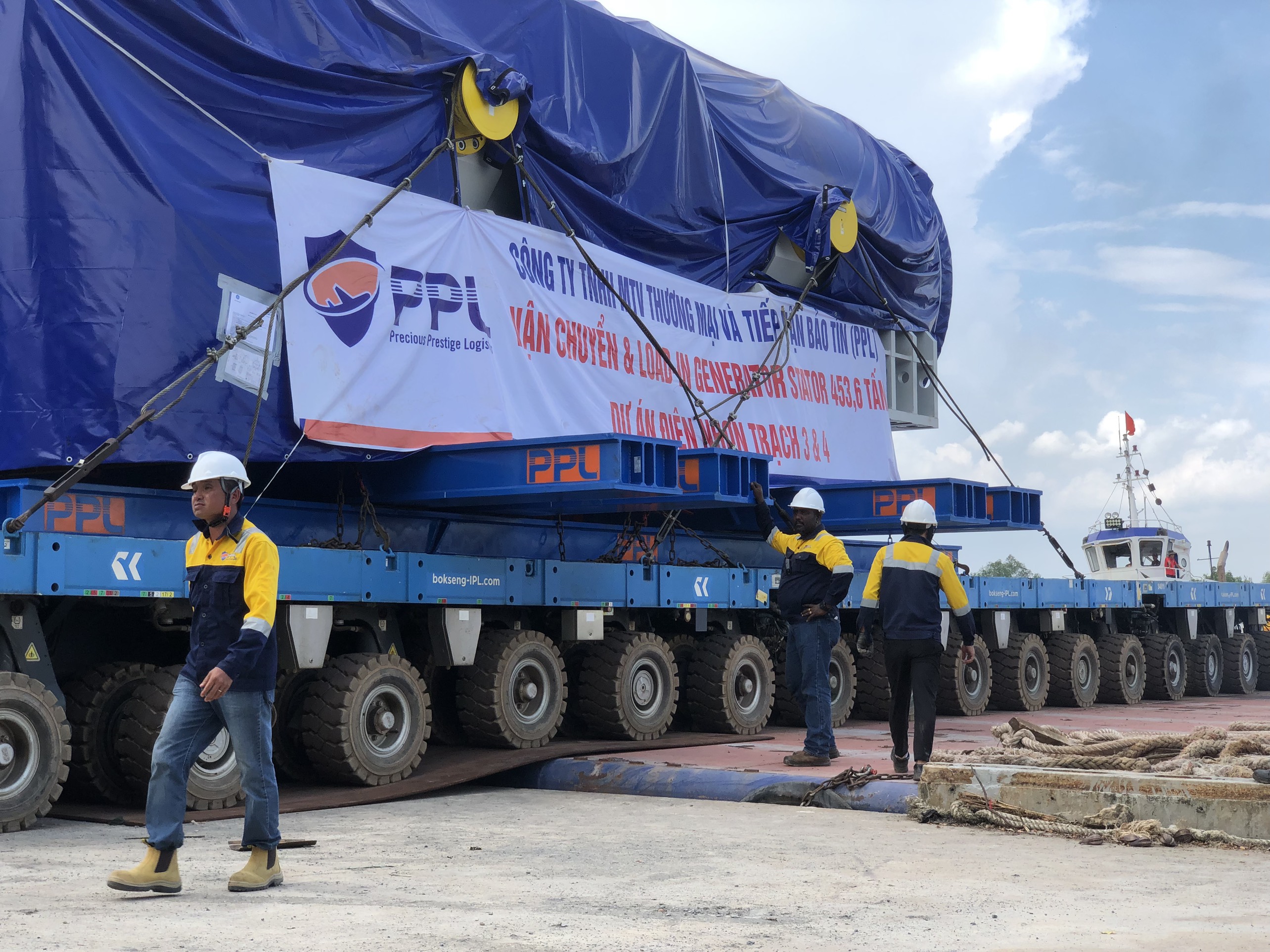
SPMT can operate in confined spaces thanks to its hydraulic leveling system, with wheels capable of rotating 360 degrees on the spot. PPL operates 40 SPMT axle lines, with each unit comprising 4 to 6 axles that can work independently or be connected together. In Vietnam, there are only three providers of load-out services; among them, PPL has seven years of specialized experience and has carried out load-out operations for numerous oil and gas projects, including the heaviest structures weighing up to 3,200 tons at Vung Tau Port.
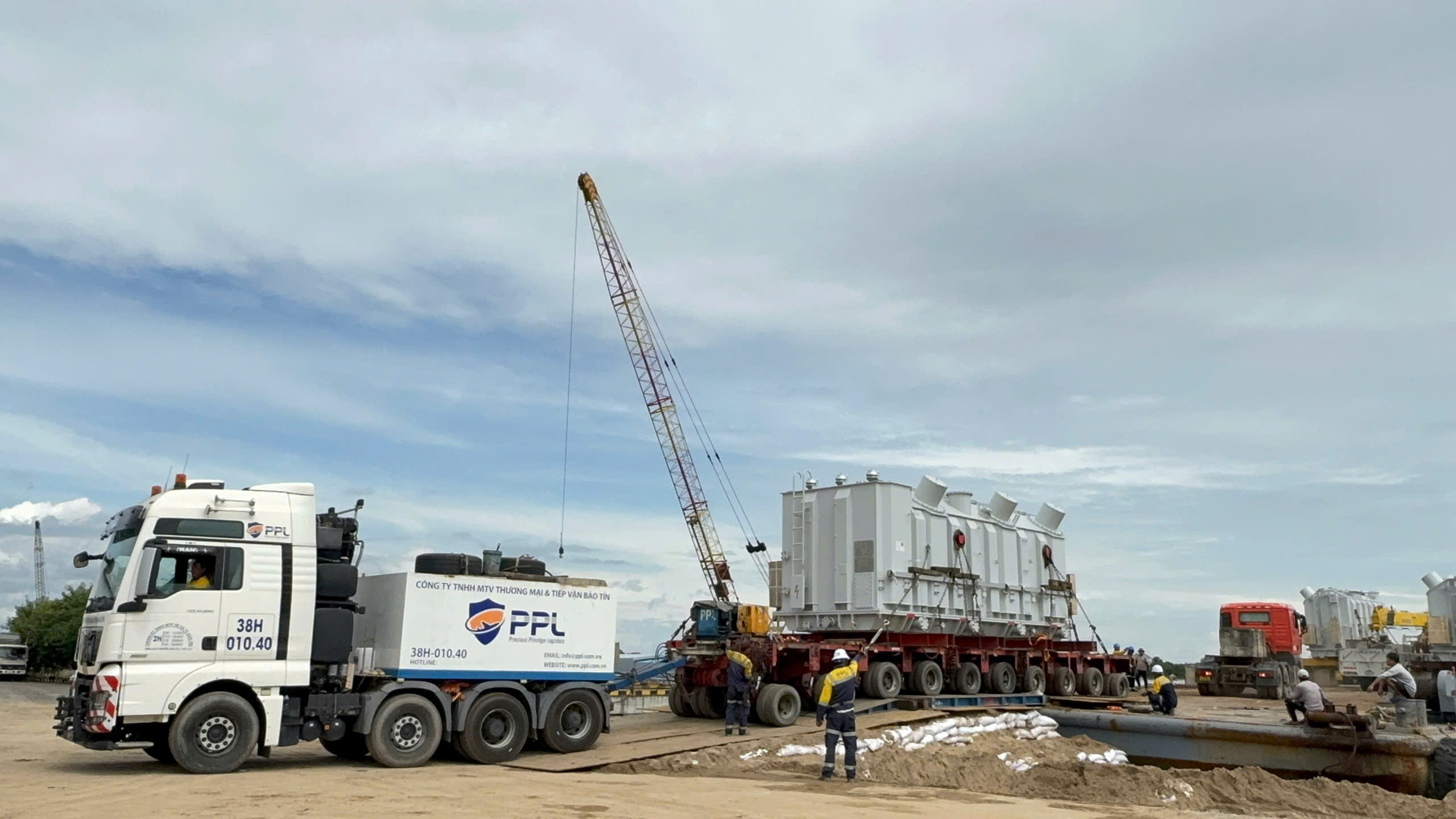
Offshore structures float on the sea surface, so their component modules are prefabricated at yards near ports, then transported and installed at the project site. Load-out is the process of moving cargo from the quay onto a barge. The load-out procedure is highly complex because most offshore components are very large and heavy, affecting the structural integrity and stability of the barge.
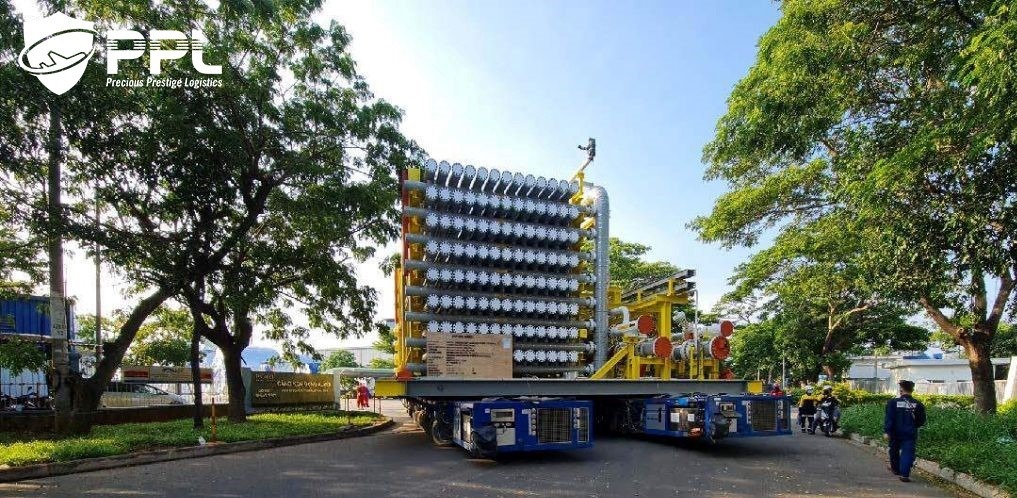
Transportation of super heavy and oversized cargo on internal roads of industrial zones using SPMT
2. Các thiết bị chuyên dụng
Self-propelled modular transporters, SPMTs, are specialized equipment for transporting super heavy and oversized cargo, capable of carrying very high loads of up to 30 tons per axle. The trailers are designed to be connected in configurations suitable for each project, ensuring even load distribution across all axles.
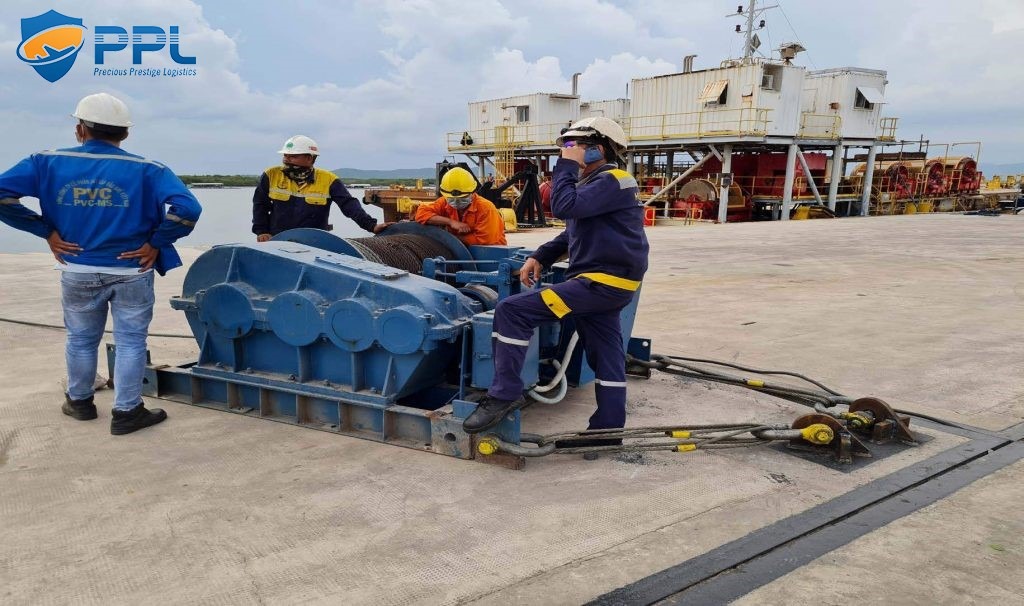
Using hydraulic winch systems and electric winches for the purpose of mooring barges to the quay
When receiving cargo from the manufacturing plant, the trailer is lowered beneath the structure to lift the cargo. Because load-out cargo is usually extremely large, it can be unstable during transportation. SPMT keeps super heavy and oversized cargo stable along uneven routes through its hydraulic lifting and leveling system.
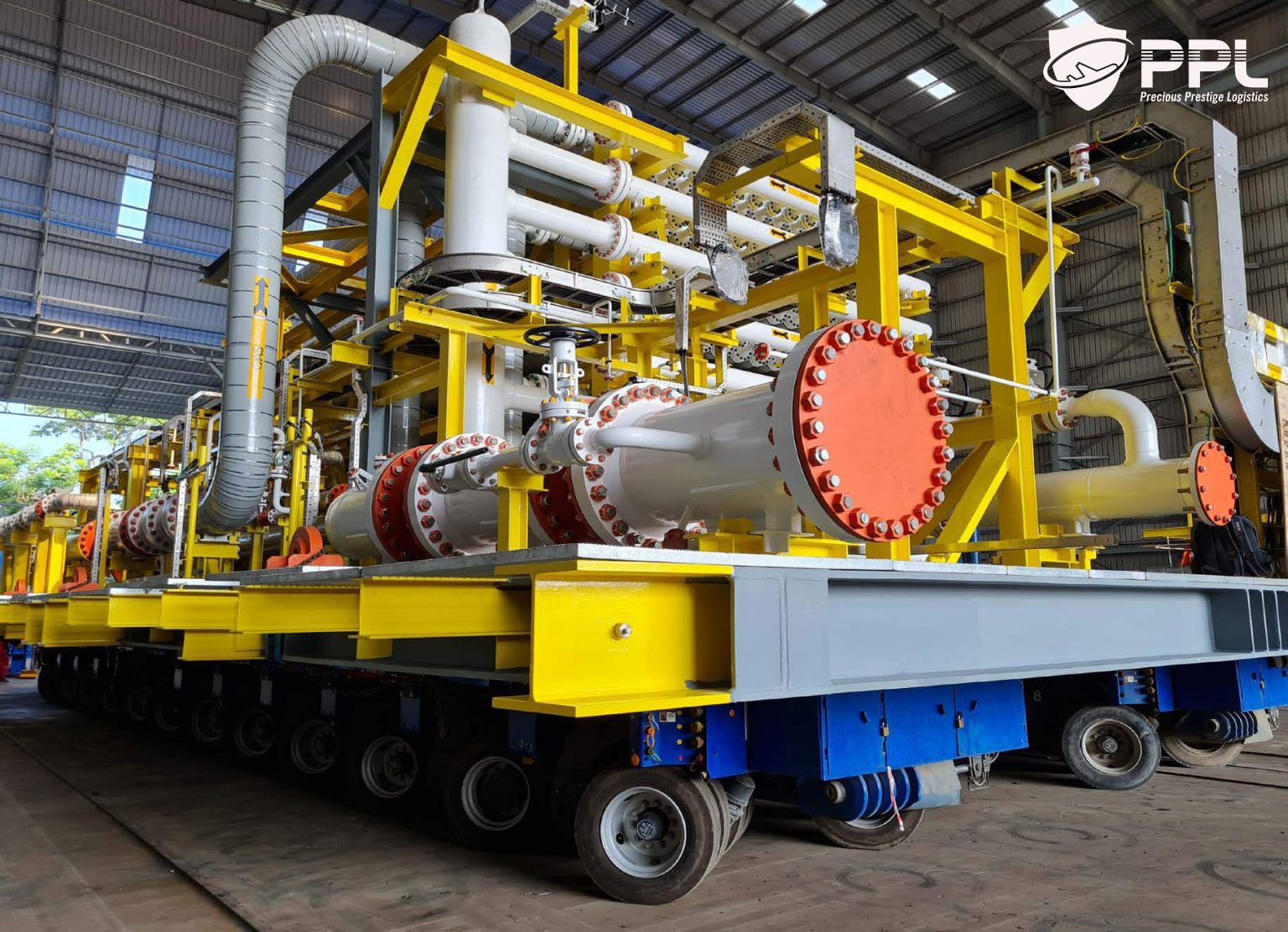
Image: Lifting offshore structures to retrieve cargo from the fabrication yard
The 360-degree steering system of PPL’s SPMT allows the wheels to rotate in multiple directions. Each wheel of the SPMT is controlled by an independent system, and the connecting axles between wheels can vary in height. This enables lifting cargo during pick-up at the fabrication yard and safely lowering it onto supports on the barge, even when the position and weight distribution of the cargo change during lifting and lowering operations. The hydraulic system of the SPMT maintains balance and stability when moving over uneven routes. The hydraulic and electrical systems can be interconnected into multiple parallel or sequential convoys to transport super heavy and oversized cargo within ports, yards, or industrial zones.